info@aasthajoints.com
 +91 9227222370



Our Blog
Home  Blog
Blog
Blog
Blog
Ask most people what a knee replacement involves and you’ll hear the same thing they take out the bad knee and put in a new one. It sounds right, but it misses almost everything that matters.
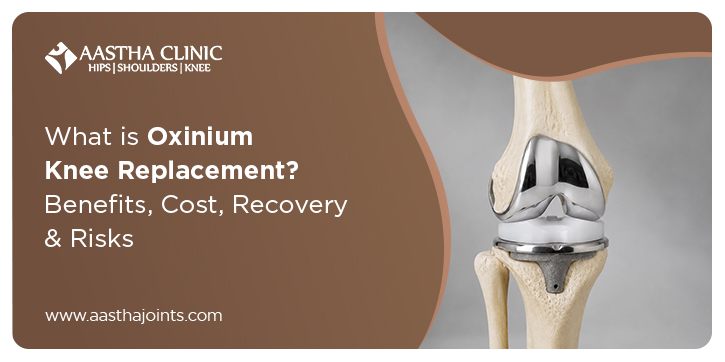
Knee replacement doesn’t remove your whole knee. It resurfaces the worn parts of the joint with smooth metal and plastic, so the bones stop grinding and you can move without that constant, wearing pain.
And here’s the part hardly anyone explains: your knee isn’t one surface. It has three separate areas, the inner side (medial), the outer side (lateral), and the section behind your kneecap (patellofemoral). Arthritis rarely wears out all three at once. Which of these areas is damaged is the single biggest thing that decides what kind of surgery you need, and it’s why there’s no one-size-fits-all answer. That’s the lens any good orthopedic surgeon uses before ever recommending a procedure.
Once you know the knee has three compartments, the different operations start to make sense. Here are the five you’re most likely to hear about.
This is the most common one. When arthritis has spread across the whole joint that “bone-on-bone” ache that shows up on the stairs, in bed, and just standing in the kitchen all three compartments are resurfaced. It’s the most predictable, long-lasting choice for widespread damage, which is why it’s done so often.
If only one compartment is worn and the rest of the knee is still healthy, there’s no reason to replace the whole thing. A partial replacement resurfaces just the damaged section and leaves your healthy cartilage and ligaments alone. The reward is a smaller cut, less blood loss, quicker recovery, and a knee that often feels more like your own. The trade-off: if arthritis later spreads to another area, you may need it upgraded to a total replacement down the line.
This is the one almost nobody writes about, and it matters. Some people have arthritis in just one spot: behind the kneecap. The tell-tale sign is pain at the front of the knee that flares going up or down stairs, squatting, or after sitting still for a long stretch, like a movie or a long drive. Instead of replacing the whole joint, only the back of the kneecap and the groove it slides in are resurfaced. It tends to suit younger, active people, and if arthritis spreads years later, it can still be converted to a total replacement.
This simply means both knees. They can be done in one operation (simultaneous) or a few weeks to months apart (staged). One sitting means a single recovery appealing if both knees are equally bad and you’re otherwise fit. Staged is gentler on the body and is usually the safer route when your general health needs more care.
An implant is built to last many years, but not forever. If an old replacement wears, loosens, or becomes infected, a revision swaps it for a new one. It’s a more demanding surgery than the first one reason getting that first operation right, with the right surgeon, counts for so much.
One myth worth clearing up: robotic knee replacement is not a separate type. The robot doesn’t operate on you. It’s a tool that helps the surgeon plan and position the implant more precisely, and it can be used for both total and partial surgery. The skill still sits with the person holding it.
There’s no “best” operation only the best one for your knee. When choosing, a knee replacement surgeon weighs a handful of things together:
• How many compartments are actually damaged one, two, or all three
• How advanced the arthritis is, and what’s driving it
• Your age and how active you want to be afterward
• The stability of your ligaments and the quality of your bone
• our overall health, and whether your body can handle a bigger procedure
Notice what’s missing from that list: an X-ray on its own. Scans matter, but they don’t feel your knee give way on the stairs or show how you actually live. That’s why the decision always needs a proper clinical examination, not just an image.
And here’s something patients are rarely told. A good share of the people who receive a total knee replacement could have qualified for a partial one research suggests many candidates are suitable for partial surgery, yet the large majority still have the whole joint replaced. If keeping as much of your natural knee as possible matters to you, ask directly whether you’re a partial or kneecap candidate.
A few good questions for your consultation: Which type suits my knee, and why? Am I a candidate for a partial or kneecap replacement? How long should this implant last for someone my age?
Cost is usually the question patients most want answered and least often find answered honestly, so here are realistic ranges. Treat them as ballpark figures — the final number always depends on your condition, the implant, the hospital, and the city.
• Partial Knee Replacement: roughly ₹1.5–3 lakh
• Total Knee Replacement: roughly ₹2.5–5 lakh
• Robotic Knee Replacement: roughly ₹3.5–6.5 lakh
• Bilateral and revision surgery: usually higher, as they involve more work or more complex implants
What moves the price? Mostly the implant Indian-made implants cost far less than imported premium brands plus the hospital’s category, the city, and whether robotic assistance is used. Two things worth knowing: India’s NPPA has capped the price of key knee implant components, which limits how much you can be overcharged on that part; and knee replacement is generally covered by health insurance when it’s medically necessary, often on a cashless basis. Always ask for an itemized estimate surgeon’s fee, implant, operation theatre, hospital stay, and physiotherapy so there are no surprises later.
Because the right procedure changes the cost, a real quote only makes sense after an examination. If you’re in Gujarat, you’re welcome to get a clear, personalized estimate from Dr. Krunal Shah, a knee replacement surgeon in Surat, instead of guessing from a range.
Sometimes, yes and a surgeon worth trusting will tell you so rather than rushing you to the operating table. When the arthritis isn’t yet severe, several things can buy you years of comfort: losing even a few kilos takes real load off the joint, targeted physiotherapy strengthens the muscles that support it, small changes to daily activity reduce wear, and injections can settle a flare.
For younger patients especially, there are also joint-preserving surgeries that most articles skip completely. Knee arthroscopy can clean up or repair certain problems through tiny incisions. A high tibial osteotomy realigns the leg to shift your weight off the worn side of the knee, often delaying a replacement by years.
And in the right cases, cartilage procedures can restore some of the joint’s own surface. These options don’t suit everyone, but they’re worth exploring before committing to a replacement which is exactly the conversation a good orthopedic doctor in Surat should be willing to have with you.
The aim of any honest orthopedic surgeon in Surat is simple: the least surgery that gives you a lasting result. Dr. Krunal Shah is a fellowship-trained knee, hip, and shoulder specialist who helps patients weigh every option from preserving the joint to replacing it and choosing what fits their life.
Declaimer: Medically reviewed by Dr. Krunal Shah, MS (Orthopedics) fellowship-trained knee, hip, and shoulder specialist at Aastha Joints Clinic, Surat. Trained in advanced joint reconstruction in Germany and the UK, with an ISAKOS-approved arthroscopy fellowship and advanced shoulder surgery fellowship in Italy.