info@aasthajoints.com
 +91 9227222370



Our Blog
Home  Blog
Blog
Blog
Blog
When both knees hurt, every staircase, prayer session and walk to the market turns into a negotiation. If you’re looking for a Knee Replacement Specialist, you’ve probably already tried tablets, physiotherapy or injections, and the pain is still winning.
Bilateral total knee replacement means both worn-out knee joints are replaced with artificial implants, either in one operation or in two planned stages. It can bring lasting pain relief and easier movement, but it suits only carefully selected patients. Here’s what the benefits, risks, recovery and cost really look like.
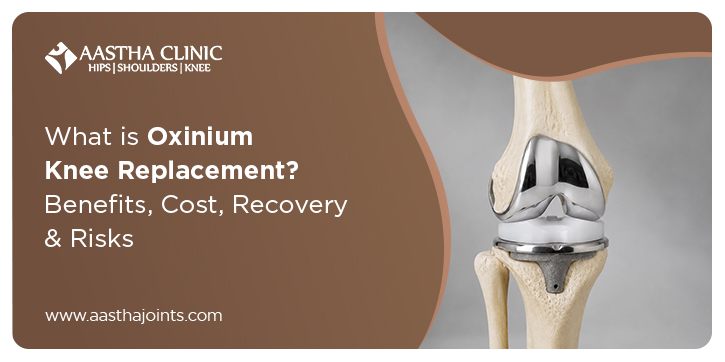
In this surgery, the damaged cartilage and a thin layer of bone are removed from the thigh bone and shin bone. Smooth metal and medical-grade plastic parts take their place. Doing it for both knees is called bilateral replacement, or simply double knee replacement.
The real question isn’t only “should I do it?” but “should I do both knees together?” An Orthopedic Surgeon in Surat will usually talk you through three routes.
Simultaneous surgery means both knees are done in one sitting under a single anaesthesia. You get one hospital stay and one rehab phase, but the surgery puts a heavier load on your heart and body.
Sequential surgery in the same admission means one knee is done, then the other a few hours or days later. The total stay is shorter than two separate admissions, though the early days are still demanding.
Staged surgery means two separate operations, often months apart. It is easier on your body each time, but you go through two recoveries instead of one.
Large centres such as the Hospital for Special Surgery in New York generally wait at least three months between staged surgeries. Your own gap depends on how you heal.
The case for doing both at once is mostly practical:
• You go through anaesthesia and hospitalisation once.
• You do one stretch of rehabilitation instead of two.
• You take less total time off work or away from family duties.
• Both legs get stronger together, so you’re not favouring one “good” knee for months.
Pain relief and better walking are the real prize, whichever route you take. Benefit depends heavily on choosing the right patient, though, and that’s why your Orthopedic Doctor in Surat will spend time on your health history before talking about dates.
You’re more likely to be a candidate if arthritis has damaged both knees, daily activities are hard, and non-surgical treatment has stopped helping. General fitness matters just as much as the X-ray.
A surgeon may suggest staging, or waiting, if you have:
• Heart, lung or kidney disease
• Poorly controlled diabetes or blood pressure
• Very high body weight
• Anaemia or low strength before surgery
Some large hospitals set firm limits on age or BMI for same-day double surgery. Those are one hospital’s rules, not universal ones, so don’t treat any single number as your verdict. You also need someone at home for the first few weeks, because both legs will be sore at once and you can’t lean on the healthy side.
Every major surgery carries risk, and replacing both knees together adds some. Research from high-volume hospitals suggests a higher chance of blood clots, heart-related strain and greater blood loss in simultaneous surgery, which is exactly why selection matters.
• Infection: bacteria can settle around the wound or implant. Surgeons reduce this with sterile operating conditions, antibiotics and careful wound care.
• Blood clots: clots can form in the leg veins and, rarely, travel to the lungs. Blood thinners, compression devices and early walking help prevent them.
• Higher blood loss: some patients need a transfusion. Pre-surgery blood checks and careful surgical technique keep this in check.
• Stiffness: the knee may bend less than expected after healing. Early, regular physiotherapy is the best protection.
• Lingering pain or implant problems: uncommon, but possible. Follow-up visits and X-rays catch them early.
Your surgeon should explain these in the context of your own health, not as a generic list.
Most people need roughly three to six months to feel fully recovered after a double knee replacement, though plenty are doing everyday tasks well before that. Your pace depends on your age, strength before surgery and how consistently you do your exercises.
In the first few days, the focus is on pain control, your first steps with a walker or support, and gentle ankle and knee movement. Over weeks one and two, you’ll take short walks at home, do daily physiotherapy and manage swelling.
By weeks three to six, you usually need less support, feel more confident on stairs and handle light routine tasks. From weeks six to twelve, walking gets stronger, many people return to desk work, and low-impact activity builds up. Between three and six months, you gradually settle back into your normal routine with fuller strength.
Indian homes bring their own questions. Before surgery, think about the bathroom (an Indian-style toilet is hard on new knees), how you sit for meals or puja, and the steps at your entrance or the temple you visit. Many patients want to sit cross-legged or squat again, and this depends on the implant and your own movement, so ask your surgeon about it directly. Set up a raised seat, grab bars and a firm chair beforehand.
Avoid running and jumping long term. Walking, swimming, cycling and light golf are usually fine once you’re cleared.
Most Indian price guides put bilateral knee replacement at about ₹3.5 to ₹8 lakh for both knees, and premium hospitals or complex cases can push the bill towards ₹10 lakh. A single knee typically falls in the ₹1.5 to ₹6 lakh range. A hospital in Hyderabad, for example, lists its standard bilateral total knee package at ₹3.4 to ₹4 lakh. That is a good picture of how wide the spread is.
Here is a rough guide to where your own quote might land:
• Lower end (around ₹3 to ₹4.5 lakh): a standard implant, a shared ward or semi-private room, and a smooth recovery in a mid-tier private hospital.
• Middle (around ₹4.5 to ₹6.5 lakh): a private room, a better-quality implant and a slightly longer stay.
• Higher end (₹7 lakh and above): a corporate hospital, robotic assistance, or a patient who needs extra monitoring because of other health conditions.
The fee itself is also only a slice of the whole. As an example from one published breakdown, the surgeon’s fee runs roughly ₹50,000 to ₹1.5 lakh per surgery and anaesthesia ₹20,000 to ₹50,000. The rest goes on the implant, operation theatre, room, medicines, tests and physiotherapy.
Is doing both knees together cheaper? Usually, yes. When both knees are done in one sitting, operation theatre, anaesthesia and hospital stay costs are shared, so the total is lower than paying for two separate surgeries. If your surgeon recommends staging for safety, expect a higher combined bill, but your safety should decide the plan, not the price.
Implant cost is regulated. India’s pricing authority has capped what can be charged for knee implants. The standard cobalt-chromium implant was capped at ₹54,720 plus GST, and titanium or oxidised zirconium implants at ₹76,600 plus GST. The authority has extended those ceilings in later years, so ask the hospital for the current figure and check it against your bill.
Insurance. Many health insurers cover knee replacement, and most plans in India include it, often with cashless approval at empanelled hospitals. Before booking, check your policy’s waiting period, the room-rent limit, and whether both knees in one admission are treated as one claim. Ask the hospital’s insurance desk for pre-authorization in writing.
Any Knee Replacement Surgeon in Surat should be comfortable with these. The answers tell you far more than a brochure does.
1. “What tests will you do before deciding between one stage and two?” A thoughtful answer names specific checks, such as a heart evaluation, blood sugar control, haemoglobin and kidney function, rather than “we’ll see on the day.”
2. “If both knees are done together, how will you manage blood loss and clot risk?” You want to hear a concrete plan, covering blood thinners, compression devices, getting you walking early and having blood arranged if needed.
3. “What would make you switch to staged surgery, even on the day?” This shows whether the surgeon has clear safety limits and will stick to them.
4. “Which implant are you suggesting for me, and why?” Ask for the brand and type to be written in your discharge papers, and whether its price sits within the government ceiling.
5. “What exactly is in the package, and what isn’t?” Ask about ICU stay, extra hospital days, blood, physiotherapy and what happens if there’s a complication or readmission.
6. “Realistically, what will I be able to do with these knees?” Ask about stairs, the Indian-style toilet, cross-legged sitting and squatting, so you don’t discover the limits after surgery.
7. “Who do I call if there’s fever, wound discharge or sudden swelling at night?” A clear follow-up plan matters most in the first two weeks at home.
If knee pain keeps you from sleeping, climbing stairs or walking comfortably, it’s worth getting a proper opinion rather than waiting it out. Dr. Krunal Shah completed his MBBS at Government Medical College, Surat and his M.S. in Orthopedics at SMIMER, Surat. He went on to train in joint reconstruction in Germany and London, and holds arthroscopy and shoulder surgery fellowships. He operates at major hospitals across South Gujarat. A Knee Replacement Specialist in Surat can look at your X-rays, your overall health and your daily routine, and tell you whether replacing both knees now, in stages, or not yet is the right call.
Book a consultation at Aastha Joints. If you’d like to understand other knee procedures first, read our pages on Knee Arthroscopy and Meniscus Injury.
This article is for general education and doesn’t replace personal medical advice.